So what should be included in your toolkit? Let's take a closer look!


These are a number one necessity to have handy. I have enough for each of my students to have one as well as myself. We use these to practice writing letters, words, sentences, dictation, encoding for sounds, vocabulary, sight words, character traits, etc. You name it!


I have both dry erase boards and dry erase sentence strips (that I picked up from the Dollar Tree!)


My students love to use all different kinds of pointers for tracking their reading. These are one of their favorites and they are merely drink stirrers, but we call them "swivel sticks" because they are so "swively" and fun!


You can also get finger lights at the Dollar Tree:

Or witch's fingers are a fun thing to have around too:

On a side note, I generally only allow students to use pointers when they are in the early stages of reading. Once they become more transitional/fluent readers, they should no longer need pointers to help them track. Then we switch to index cards to build fluency. More on that later....

Ready to go for guided writing! For emergent readers, practice letter formation and student names. For early readers, practice encoding for sounds, CVC words, sight words, dictation, and open ended sentences. For transition and fluency readers, begin composing sentences on their own. It can be a story or a reflection of their reading. Have them write the problem and solution. Or the beginning, middle, and end.

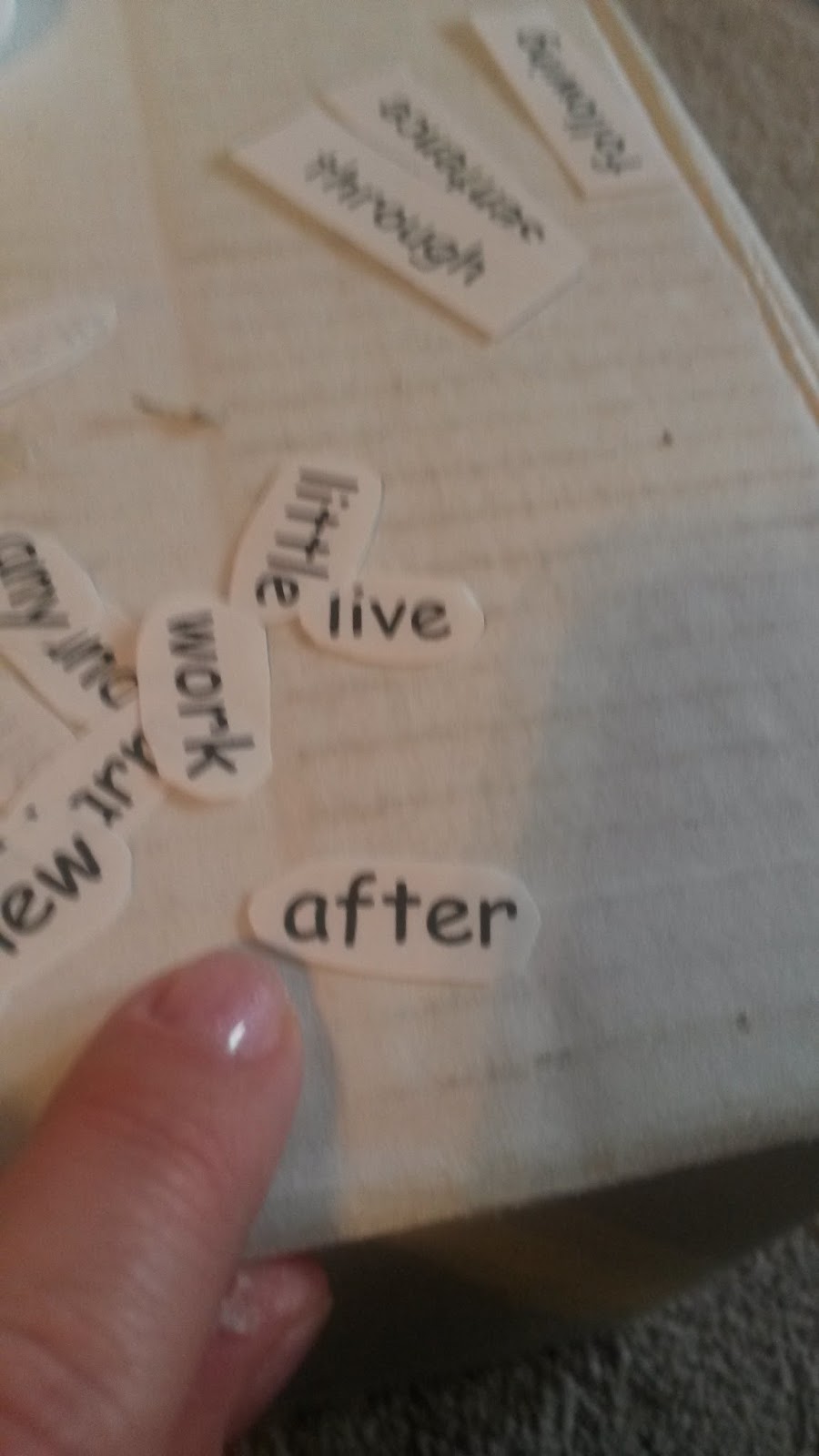
These are a ton of fun. I use these for students to hunt for words within their books. They can hunt for a particular sight word, a word with a phonetic sound you are working on, a vocabulary word, etc. You can pick up the cut outs for free in my store!


Great for writing out vocabulary and sight words that need to be learned for the story that is read. Also for helping students to build fluency!


I use these in so many ways and my kids LOVE when I put a highlighter in their hands! For my lower kids, it is a great way to do a sight word hunt or a hunt for a phonetic sound. For my higher kids, we will use these to hunt for evidence of a comprehension question. We also use them to highlight punctuation when working on fluency.


Some of my best interventions for low readers involve building words with letter tiles, letter cards, and letter cubes. These are great for decoding words, encoding words, building sight words, and word ladders.


I created these as a tool for teaching students to chunk sounds. It is a great decoding tool and a quick skill to do during each guided reading lesson.


I use stamps and stickers mostly for concept of word review. We use them as stepping stones under each word as we read. It gives students a place to put their finger while tracking.

I keep several sets of sight word cards handy for quick review games!


I love giving students picture cards for practicing different skills. We use these for phoneme segmentation, encoding for sounds, guided writing, etc.


I like to incorporate some Words Their Way into my guided reading lessons, as often times, the spelling skills that we are required to do with our reading program is not on the level that my students need. I have learned that the easiest way to do this is to have several sets of sorts ready to go. I copy them, cut them, and paper clip them so that we don't waste any time getting materials prepared during our lesson. Then I gather them up to save for future use with another group! It takes time to put them all together and prepare, but save SO much time in the end!
Plus, I don't just limit myself to Words Their Way sorts. We also do concept sorts, picture sorts, grammar sorts, rhyming matching cards, etc.